

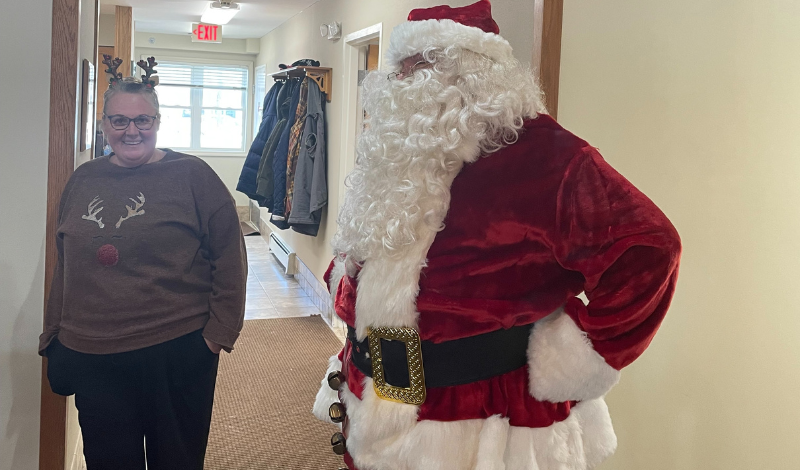
Games, gifts, a visit from Santa – and the efforts of Michigan Area volunteers – brightened the Advent season for long-term residents of Rose Hill Center, a residential treatment program for adults with serious mental illness.
The December 16 event was attended by residents of Malta House and Horton House, two long-term residences at Rose Hill Center. They enjoyed an Italian buffet, served by Michigan Area members. Gifts were contributed by members of the Michigan Area, who bought items from residents’ wish lists. The wrapped gifts will be opened on Christmas Day.

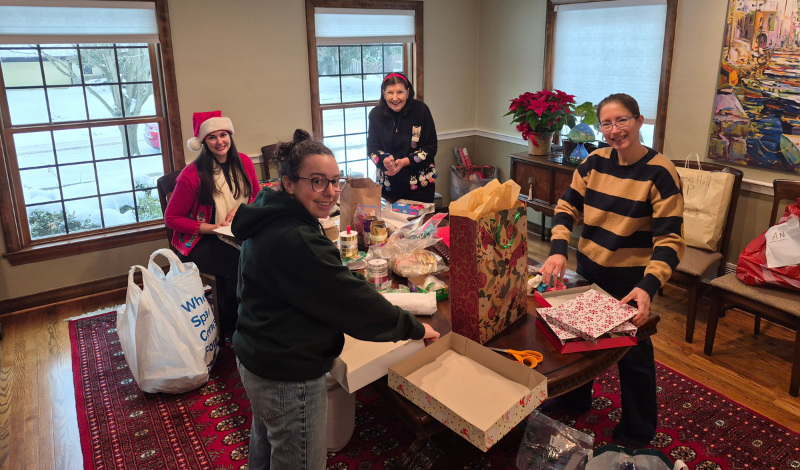
Gifts were contributed by Mike Bonventre, KM, and Sue Bonventre, DM; Rosanne Brugnoni, DM; David Closs, KM, and Noel Closs, DM; Auxiliary Colin Connery and Kiki Connery; Stephanie Le, DM; Marcia McBrien, DM; Eileen Newell, DM; Sean Shriner, KM, and Auxiliary Jenna Shriner; Michigan Area Chair Andy Smith, KM, and Andrea Smith, DM; Mark Thut, Member in Formation; Tom Willis; and Barbara Wilson, DM. The gifts were wrapped by Carolyn Andree, DM; Auxiliary Kristen Andree; Michigan Area Hospitaller Kathleen Mastrangelo, DM, and her daughter Mia; and Andrea Smith.
Order of Malta volunteers also served lunch and helped out at the December 16 party: Kathleen and Mia Mastrangelo; Sue Bonventre; Mary Hoadley, Member in Formation; and Dr. Daniel Reddy, Member in Formation.
Also attending was Dan Kelly, KM, who with his late wife Rosemary Kelly, DM, founded Rose Hill. When their youngest son John was diagnosed with schizophrenia in the 1980s, the Kellys searched for a program that would provide both comprehensive treatment and follow-up care. They eventually chose Gould Farm, a therapeutic residential farming community in Massachusetts. Inspired by the Gould Farm model, the Kellys decided to found a similar program in Michigan, and with the help of generous donors, opened Rose Hill in Holly, Michigan in 1992.
Located on 400 acres, Rose Hill Center provides residential care for adults aged 18 and older, treating all major mental health disorders. There are three program levels, depending on the individual’s diagnosis and treatment plan: residential, transitional living, and extended-stay.

A key feature of the Rose Hill program helps residents find purpose in their lives. Residents can choose from among several work teams – for example, the “Farm Team” cares for the 100 animals living at Rose Hill, while the “Horticulture Team” manages the greenhouses and gardens.
“Realizing that someone else is dependent on you and needs you is an important part of therapy,” said Devon Meier, Rose Hill Center Director of Philanthropy. She added that the Michigan Area’s support for Rose Hill “is very much appreciated … the residents had a great time at the party with the volunteers. That presence means more than you might imagine.”
Follow the Michigan Area on FaceBook, Instagram, LinkedIn, and X.
Many thanks to Devon Meier, Director of Philanthropy at Rose Hill Center, for her assistance with this article.
